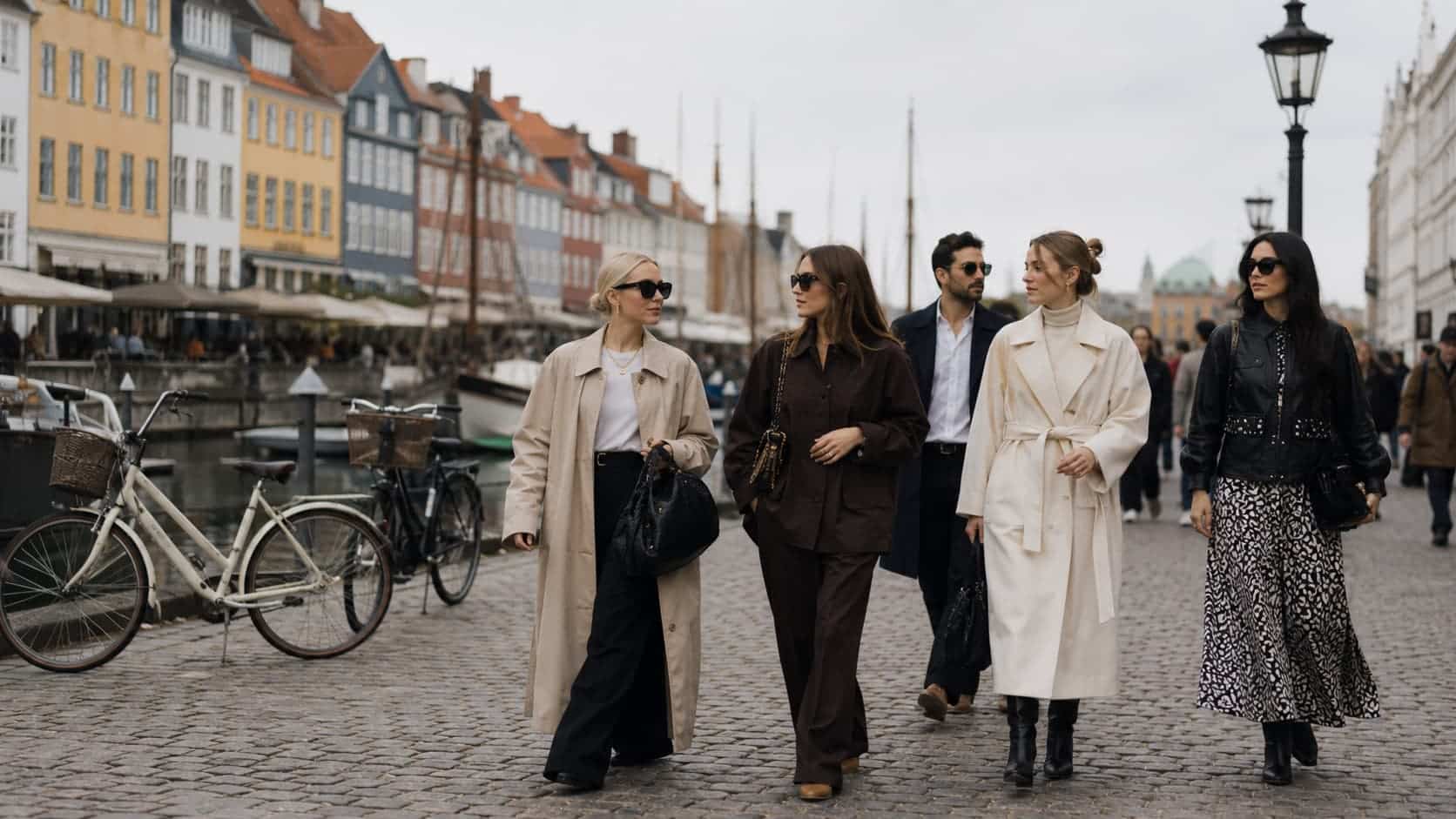

Copenhagen Fashion Week has become one of the most interesting moments in the international fashion calendar for brands looking for physical visibility in a city with a very clear identity: design, sustainability, community, lifestyle and a highly recognisable approach to contemporary fashion.
For many international brands, Copenhagen does not work in the same way as Paris, Milan, London or New York. Its scale is more compact, but that is exactly what can make it strategically valuable. A well-planned pop-up, showroom or private brand activation can feel more visible, more relevant and more connected to the local creative scene.
If you are looking for the Copenhagen Fashion Week 2026 dates, there are two main windows to consider: January and August. The AW26 edition took place from 27 to 30 January 2026, while the SS27 edition is scheduled for 3 to 7 August 2026.
Key Copenhagen Fashion Week 2026 dates
| Session | Dates | Why it matters for brands |
| Autumn/Winter 2026 | 27–30 January 2026 | First key window of the year for buyers, press, Nordic brands and curated showroom formats |
| Spring/Summer 2027 | 3–7 August 2026 | Strong moment for public-facing activations, community events, launches and seasonal storytelling |
For brands asking when Copenhagen Fashion Week 2026 takes place, August is usually the more interesting window for visibility, content and open-format activations. January, on the other hand, can work better for more selective formats: showrooms, private appointments, buyer meetings or press previews.
For many brands, the real challenge is not just knowing the dates of Copenhagen Fashion Week. It is deciding early enough what kind of presence makes sense in a city where the audience quickly understands whether an activation feels authentic or simply imported.
Why Copenhagen Fashion Week matters beyond the official calendar
Copenhagen Fashion Week is not just a schedule of shows. It is a platform where fashion, sustainability, design, retail and urban culture meet in a very specific way.
The event has gained international attention as one of the strongest alternatives to the traditional “big four” fashion capitals. It has also been described as a leading contender for fashion’s “fifth city”, thanks to its combination of creative energy, sustainability standards and global influence.
That changes the role of temporary retail.
A brand activation during Copenhagen Fashion Week can respond to very different goals: presenting a new collection, receiving buyers, testing the Nordic market, building community, generating press attention or associating the brand with a more conscious and design-led fashion context.
That is why brands should not see Copenhagen only as a smaller fashion week. In many cases, it can be a more precise and strategic city for building perception.
Which Copenhagen Fashion Week edition is more relevant for your brand?
Not every edition creates the same type of opportunity. The best choice depends on whether the brand is looking for visibility, private meetings, market testing, press attention or a stronger connection with the Nordic creative scene.
January: a more selective and curated window
The January edition usually works well for brands that need a more controlled and appointment-led format.
The season, the weather and the rhythm of the city make it especially suitable for showrooms, previews, buyer meetings, press appointments and private presentations.
It can also be a strong moment for brands in categories such as outerwear, knitwear, accessories, premium lifestyle, Scandinavian design or any product that naturally fits an autumn/winter context.
August: more visibility, more street style and more activation potential
The August edition normally offers a more open dynamic. The city feels more accessible, the street-style scene has more movement and public-facing experiences can make more sense.
For brands planning a launch, a pop-up store, a community event or a content-driven activation, August can be the strongest window.
Copenhagen Fashion Week’s SS27 official schedule is set for 3–7 August 2026, and the official event and talk schedule also works around this physical five-day window.
Copenhagen compared with other fashion weeks
After the main international fashion weeks, Copenhagen has a very clear position.
Paris still concentrates luxury, global visibility and institutional fashion power. Milan works strongly around heritage, craftsmanship and premium fashion. London is more experimental. New York often has a stronger commercial and media-driven rhythm.
Copenhagen offers something different: a more manageable city, a highly recognisable fashion community and a clear association with design, sustainability, lifestyle and street style.
For brands that do not want to disappear inside an overcrowded calendar, that scale can become an advantage.
Best areas in Copenhagen for a pop-up during Fashion Week
[Suggested visual: simple map of Copenhagen highlighting key activation areas: Indre By / Strøget, Vesterbro, Nørrebro, Frederiksberg, Østerbro and Christianshavn / Refshaleøen.]
Choosing the right area in Copenhagen is not about choosing the most famous neighbourhood. It is about understanding what kind of relationship the brand wants to build with the city.
Indre By and Strøget
Indre By and the Strøget area are the most obvious options for brands looking for visibility, footfall and a direct commercial reading.
Strøget is Copenhagen’s main shopping street, a 1.1-kilometre pedestrian stretch running from City Hall Square to Kongens Nytorv.
It can work especially well for brands that need public exposure, accessible retail visibility or a location that is easy for international visitors to understand.
Vesterbro
Vesterbro is a strong option for contemporary brands, creative concepts and urban activations.
The area has a less formal and more cultural energy, with independent shops, cafés, restaurants, hybrid spaces and a crowd that is closely connected to fashion, music, design and lifestyle.
It can work particularly well for streetwear, contemporary fashion, editorial pop-ups, community-led launches or brands with a strong storytelling component.
Nørrebro
Nørrebro is interesting for brands that want to move away from a purely commercial setting and connect with a younger, diverse and creative audience.
For independent, sustainable, vintage, craft-led or culturally driven brands, Nørrebro can feel more coherent than a high-traffic location with less identity.
It is also one of the areas outside the city centre where Copenhagen’s smaller and more specialised shopping scene becomes more visible.
Frederiksberg
Frederiksberg can work well for brands looking for a more polished, premium and calm perception.
It is not always the first area brands consider for Fashion Week activations, but it can make sense when the goal is not maximum traffic, but a more selective experience: appointment retail, private previews, premium lifestyle events or more intimate showroom formats.
Østerbro
Østerbro can be useful for brands looking for a more residential, elegant and lifestyle-oriented context.
It works better when the activation does not depend only on spontaneous footfall, but on a planned guest list, a strong community invitation or a collaboration with local partners.
Christianshavn and Refshaleøen
For brands looking to build a more conceptual or cultural experience, Christianshavn and Refshaleøen can offer a different type of opportunity.
They are not always the most direct areas for retail, but they can work well for installations, dinners, presentations, performances, creative events or activations where the venue itself becomes part of the story.
Exploring spaces in Copenhagen during Fashion Week
If your project is moving from research to execution, comparing real spaces early is usually more useful than waiting until the Fashion Week dates are closer.
In Copenhagen, the type of space can strongly influence how the brand is perceived. A private showroom in a discreet area does not communicate the same message as an open pop-up on a commercial street or a cultural activation in an industrial venue.
Recommended collections:
Explore event spaces in Copenhagen
Discover pop-up stores in Copenhagen
Browse showroom and private activation spaces in Copenhagen
Pop-up, showroom or private activation: which format fits best?
The best format depends less on the trend and more on what the brand wants to achieve.
| Brand objective | Recommended format |
| Public visibility | Pop-up store |
| Buyer meetings | Showroom |
| Collection presentation | Press preview or curated showroom |
| Local community building | Experiential pop-up |
| Press and influencer relations | Private activation |
| Nordic market testing | Temporary retail |
| Cultural positioning | Installation, dinner or editorial event |
A common mistake is choosing the city first and the format later.
For Copenhagen Fashion Week, it usually works better the other way around: define what the brand needs to achieve first, then decide which part of the city and which type of space can support that goal.
What makes Copenhagen Fashion Week different for brands
Copenhagen Fashion Week has a clear point of difference: sustainability is not just part of the aesthetic conversation.
The organisation has developed a Sustainability Requirements Framework, which includes 19 Minimum Standards that brands must comply with to be part of the official show and presentation schedule.
For AW26, all brands on the official schedule were screened against the revised 19 Minimum Standards.
This also matters for off-schedule activations.
A brand that wants to show up in Copenhagen during Fashion Week should pay close attention to coherence: materials, production, messaging, space design, waste, logistics and the overall experience.
In some cities, a highly spectacular activation can work through impact alone. In Copenhagen, an activation that feels inconsistent with the brand’s values or with the city’s design culture can feel out of place very quickly.
How far in advance should brands secure a space for Copenhagen Fashion Week 2026?
Many brands underestimate how early they should start planning.
Copenhagen does not have the same level of Fashion Week real estate pressure as Paris, but because the city is smaller, the spaces that genuinely fit fashion, design and creative community can be limited.
The most interesting spaces are rarely secured when the calendar is already close. They are usually chosen once the brand has already defined its objective, budget, format, preferred area and production needs.
This is especially important for August, when an open activation may require more visual production, more local coordination and a stronger communication plan.
What many brands underestimate when planning Copenhagen Fashion Week
The most common mistake is thinking first about being present and only later about why.
That usually creates weak activations.
A stronger approach is to define first:
- whether the goal is visibility or intimacy
- whether the format should be open or appointment-based
- whether the brand wants to reach a local or international audience
- whether the activation should be commercial, editorial or experiential
- whether the sustainability message is truly reflected in the execution
- whether the chosen area supports the brand’s positioning
Only then does the space become a strategic decision.
Why local execution matters more than it seems
A Copenhagen activation rarely depends only on finding a venue.
What often shapes the final result comes afterwards: production, permits, timing, deliveries, storage, furniture, lighting, signage, hospitality, staffing, guest management and local coordination.
For international brands, this is where the project can become more complex than expected.
Copenhagen Fashion Week also allows events, installations, dinners, exhibitions, talks, workshops and other formats to be part of the wider event and talk schedule, provided they meet the relevant requirements and take place physically within the official window.
That creates opportunities, but it also requires planning.
Planning Copenhagen Fashion Week 2026 starts before the calendar
In Copenhagen, many important decisions need to happen before Fashion Week officially begins.
When a brand starts considering an activation in the city, what usually makes the difference is not only being present on the right dates. It is having enough clarity around the type of presence, the right area, the most suitable format and the level of local execution required.
During Copenhagen Fashion Week, the most relevant spaces do more than provide a location. They influence the perception of the brand, the quality of the meetings, the relationship with the local community and the type of content the activation can generate.
The best activations in Copenhagen rarely depend only on the venue. They usually rely on a clear decision around timing, format, narrative and execution.
For many brands, the most useful next step is not to wait for the calendar to get closer, but to start comparing real options and understanding which part of Copenhagen fits the project best.
If you are exploring possible spaces, you can start here:
Explore event spaces in Copenhagen
Discover pop-up stores in Copenhagen
Browse showroom and private activation spaces in Copenhagen
And if the project needs more than a venue —for example local coordination, production, experience design or activation support— it is usually better to plan that from the beginning, before the city enters its highest-demand period.
Tell us about your project.
FAQ: Copenhagen Fashion Week 2026 for brands
When is Copenhagen Fashion Week 2026?
There are two main windows in 2026. The AW26 edition took place from 27 to 30 January 2026, and the SS27 edition is scheduled for 3 to 7 August 2026.
Which Copenhagen Fashion Week edition is better for a pop-up?
For many brands, August can create stronger public visibility and more opportunities for open activations. January can work better for showrooms, private meetings, press previews or more selective formats.
What are the best areas in Copenhagen for a Fashion Week activation?
It depends on the objective. Indre By and Strøget work well for visibility and footfall. Vesterbro and Nørrebro can fit more creative, contemporary or community-led brands. Frederiksberg and Østerbro can work better for premium or private formats.
Is a showroom or a pop-up better during Copenhagen Fashion Week?
A pop-up is usually better for public visibility, product discovery and community building. A showroom is usually more suitable for buyers, press, private appointments or collection presentations.
How far in advance should brands plan?
The earlier, the better, especially if the brand needs a specific area, a premium venue, local production or a more complex activation. Copenhagen is a smaller city, so the most relevant spaces for fashion, design and creative events can be limited.
Related Fashion Week guides: For a broader comparison of activation opportunities, explore Amsterdam Fashion Week, Zurich Fashion Week and Paris Fashion Week.
Planning a pop-up: Before committing to a space, review our guides to choosing the right city for your first pop-up, deciding how long a pop-up should last and creating memorable pop-up experiences.