
Physical retail is not disappearing. Its role is changing.
For many brands, the question is no longer how many stores to open, but what each physical presence needs to achieve: launch a product, test a city, create conversation, bring a community together, sell during a specific window or turn the brand into an experience people can walk into.
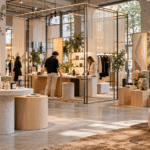
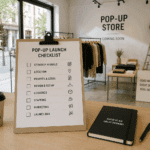
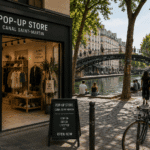
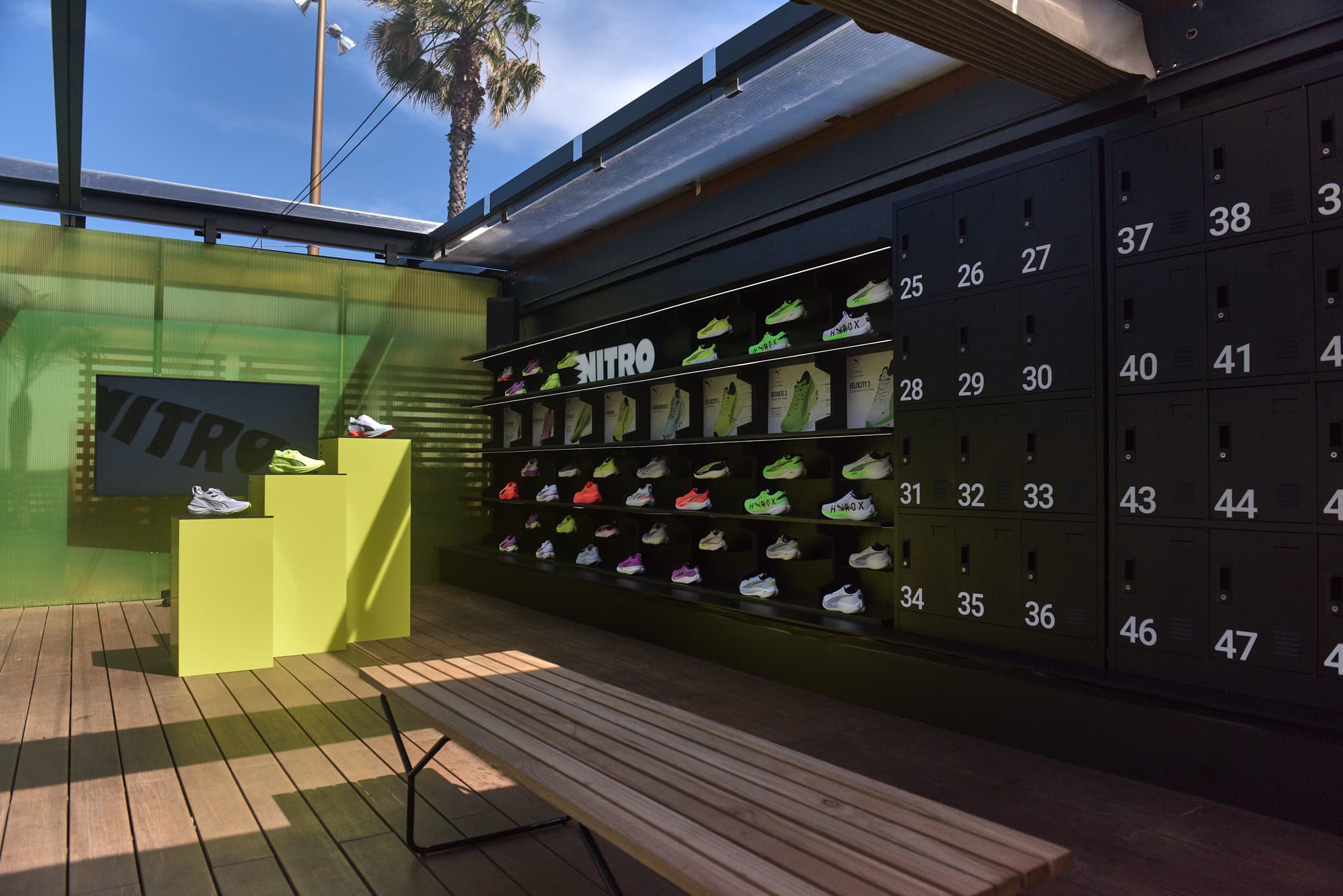
That shift sits behind many of the experiential retail trends we see today: pop-up stores, showrooms, corners, shop-in-shops and temporary activations that combine product, content, hospitality and direct interaction with audiences.
At GoPopUp, we put it simply: the space is no longer the starting point; it is a tool for executing a brand objective.
In 20 seconds
- Physical retail gains value when it does something ecommerce cannot replicate on its own: experience, contact, trial and community.
- Temporary formats let brands test markets and concentrate impact without turning every decision into a permanent opening.
- Choose the format after defining the objective, not before.
- To measure a physical activation properly, look beyond immediate sales.
Physical retail is not going back: its role is changing
The data does not point to the disappearance of stores. In its 2025 Retail Industry Outlook, Deloitte noted that a large share of purchases still happens in-store and that more than a third of surveyed executives saw improving the physical experience as a major growth opportunity.
The useful question is not whether “offline” beats “online”. Physical space is simply stopping competing with ecommerce on the wrong terms. A store can sell, but it can also let people touch and try products, discover a collection, attend an event, create content or speak directly with a brand.
Euromonitor described the same shift after Shoptalk Europe 2025: stores are evolving from points of sale into more immersive destinations. In its survey, 54% of connected consumers said they preferred physical stores that offer engaging, immersive experiences.
GoPopUp perspective
A physical presence works better when it starts with an intention, not with a venue.
Objective → audience → format → location → space → production. That order prevents brands from opening a temporary store by default and forces the experience to be designed around what the brand actually needs.
What brands are really looking for in these formats
Projects can take very different forms, but most of them answer three strategic needs.
1. Launch and concentrate attention
A launch competes for attention. A temporary space concentrates the campaign in one place and over a defined period: it lets the brand present the product, programme key moments and turn a new release into something people can visit.
The value is not only in what is sold during those days. It is also in creating a setting that press, customers, creators and community can experience and share.
2. Test a market without locking the strategy
A temporary presence lets a brand test a city, area or audience before turning that hypothesis into a permanent operation. The brand can observe demand, traffic, visitor profile and response to the concept with a much more flexible structure.
If you are at that stage, it is worth reviewing how to choose the right city for your first pop-up.
3. Create experience, community and content
Some projects create value that does not fit into a cash register. An activation can bring a community together, generate B2B meetings, produce content, support PR, enable product trial or turn a brand’s digital universe into a physical experience.
That is where temporary retail becomes especially powerful: the same space can be a store in the morning, a presentation venue in the afternoon and a community event at night. The POP MART case in Barcelona is an example of how a temporary presence can become a recognisable brand experience.
Which format fits each objective
Not every project needs a pop-up store. The format is a consequence of the objective.
| Main objective | Format that usually fits best | What it brings |
|---|---|---|
| Launch, sales and visibility | Pop-up store | A branded presence, concentrated impact and direct contact with customers. |
| Press, buyers, meetings or wholesale | Showroom | A controlled environment for presenting products and holding meetings. |
| Test presence within an existing audience | Corner / shop-in-shop | Lower operational friction and access to established footfall. |
| Awareness, community and content | Experiential activation | More freedom to design interaction, programming and brand narrative. |
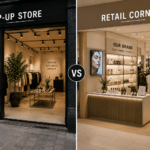
If you need to separate the concepts, see our guide to pop-up stores, temporary shops and retail corners, or our practical introduction to what a pop-up store is.
HUGO BOSS, for example, explains in its 2025 annual report that it combines physical stores, digitalisation, pop-ups and hospitality concepts. The point is not to copy the format, but to understand that the same brand can use different physical presences for different functions.
Location is no longer fixed: it is part of the activation
When the physical presence is flexible, location can be flexible too. A brand no longer needs to answer “where should we have a store?” once and for all. A more useful question is: “where does it make sense to be for this objective and at this moment?”
A campaign may need to be close to a Fashion Week; a launch may prioritise footfall and visibility; a showroom may need easy access for appointments; entering a new country may mean validating one city before scaling.
Location therefore stops being a fixed asset and becomes part of the strategy for each activation.
What changes when choosing a space for an experience
The more important the experience is, the less useful it becomes to choose a venue only by square metres or price. The space has to support what the brand wants to do inside it.
- Audience: who needs to arrive and how they will discover the space.
- Visibility: how much the project depends on spontaneous footfall versus invitation or appointment.
- Use: sales, display, meetings, event, content production or a combination of several uses.
- Operations: access, storage, loading, installation, dismantling and technical requirements.
- Duration: a few hours, days or several weeks change both the ideal space and the production required.
- Journey: how people move, where they discover the product and which moment we want them to remember.
The best space is not necessarily the largest or most spectacular. It is the one that makes the experience executable and keeps objective, audience and production aligned.
From point of sale to point of relationship
This shift in function also changes how success should be measured. Sales still matter, but they do not always explain whether an activation worked.
Depending on the project, it may make sense to track qualified traffic, leads, appointments, product trial, database growth, generated content, press coverage, repeat behaviour or market learning. The right metric depends on the job the space was meant to do.
That is why, in experiential retail, space design and measurement should be defined together. If the objective is conversation, the space should create shareable moments. If the objective is lead generation, the experience should include clear registration points. If the objective is market validation, the brand needs to be able to learn from real visitor behaviour.
FAQs about new physical retail formats
Does ecommerce growth make physical stores less important?
Not necessarily. Digital and physical channels play different but increasingly connected roles. Ecommerce brings convenience and scale; physical space can bring experience, product trial, community, service and direct contact with the brand.
What advantage does a pop-up have over a permanent store?
Flexibility. It lets a brand activate a location for a defined period, test demand or execute a campaign without taking on the same long-term operational commitment as a permanent store.
Which physical format should a brand choose?
It depends on the objective. Sales and launches often fit a pop-up store; B2B meetings and press can fit a showroom; testing within an existing audience can fit a corner; awareness, community or content can fit an experiential activation.
How do you measure an experiential retail activation?
There is no single KPI. In addition to sales, brands can track qualified traffic, leads, meetings, product trial, database growth, content, coverage or market learning. Measurement should follow the objective that motivated the activation.