
If you are looking for Florence Fashion Week 2026, there is one important point to clarify from the start: Florence does not work exactly like Paris, London or Milan Fashion Week.
In practice, the city’s main international fashion reference is Pitti Immagine, especially Pitti Uomo, the event that turns Florence into one of the key moments in the global menswear, lifestyle, accessories and premium fashion calendar.
For brands, this changes the way planning should happen.
It is not only about checking dates and deciding whether to “be there”. In Florence, the real opportunity lies in understanding which Pitti edition fits your objective, what type of physical presence makes sense and which area of the city can best support your brand positioning.
In 2026, the main menswear window is Pitti Uomo 110, taking place from 16 to 19 June 2026 at Fortezza da Basso in Florence. The official Pitti Immagine calendar also confirms other relevant Florence-based events, including Pitti Bimbo, Pitti Filati and Fragranze.
Florence Fashion Week / Pitti Immagine 2026 key dates
Although many searches refer to it as Florence Fashion Week, for brands the real reference is usually the Pitti Immagine calendar. These are the dates worth monitoring:
| Event | Dates | Why it matters for brands |
| Pitti Uomo 110 | 16–19 June 2026 | Main window for menswear, accessories, lifestyle and premium fashion |
| Pitti Bimbo 103 | 24–25 June 2026 | Relevant for childrenswear, family lifestyle and sector operators |
| Pitti Filati 99 | 24–26 June 2026 | Useful for brands linked to textiles, materials, innovation and design |
| Fragranze 24 | 11–13 September 2026 | Opportunity for fragrance, beauty, lifestyle and sensory activations |
| Pitti Uomo 111 | 12–15 January 2027 | Next major menswear window after the summer edition |
For many fashion brands, the most strategic edition is Pitti Uomo, especially if the objective is connected to menswear, accessories, tailoring, premium lifestyle or networking with buyers and press. Pitti Uomo 110 is expected to bring together more than 720 brands from over 30 countries, once again centring the activity around Fortezza da Basso.
Why Florence Fashion Week matters beyond the calendar
Florence does not compete with other fashion capitals by replicating the same model. Its strength lies elsewhere.
While Paris concentrates global runway visibility and London often works as a creative and cultural platform, Florence has a more specific role: industry, selection, buyers, heritage, design and professional conversation.
That means a brand activation during Pitti does not necessarily have to be planned as a public-facing pop-up store. For many brands, it may be more relevant to organise:
- a temporary showroom for buyers
- a private presentation
- a brand activation with selected guests
- a press or partner event
- a product experience in a curated space
- a hybrid format between retail, networking and hospitality
In Florence, the question is not only “when is Fashion Week?”, but what kind of physical presence can build credibility in a highly professional context.
During Pitti, a space does not only solve a logistical need. It also communicates positioning, brand level and the type of relationship you want to create.
Which Pitti edition is right for your brand?
Not every Pitti Immagine window serves the same purpose. Choosing the right edition helps avoid out-of-context activations or investments that do not connect with the right audience.
June: the key menswear and lifestyle window
The June edition of Pitti Uomo is usually one of the most relevant moments for menswear, accessories, footwear, lifestyle, tailoring, elevated streetwear and contemporary brands looking for professional visibility.
In 2026, Pitti Uomo 110 includes names such as Simone Rocha, DSM Kei Ninomiya, JiyongKim and a special project by Sunflower with Copenhagen Fashion Week, reinforcing the international and creative weight of the edition.
For brands looking to connect with buyers, press or international partners, June can work especially well for:
- temporary showrooms
- private presentations
- product activations
- distributor appointments
- small events with a professional audience
January: a more industry and commercial-calendar-driven edition
The January edition of Pitti Uomo is usually closer to the start of the year’s commercial planning cycle and the Fall/Winter collection rhythm.
It can be an interesting window for brands that are not necessarily looking for open visibility, but for qualified relationships, appointments and a more selective presence. In this context, a showroom or private presentation may be more efficient than a traditional temporary store.
September: beauty, fragrance and sensory activations
Florence can also make sense for brands outside the strict fashion category. Fragranze, Pitti’s event dedicated to fragrance, takes place from 11 to 13 September 2026 at Stazione Leopolda.
For beauty, fragrance, premium lifestyle, wellness or sensory brands, this window can create a different type of opportunity: less connected to runway or menswear, and more focused on discovery, storytelling and experience.
Best areas in Florence for an activation during Pitti Uomo
In Florence, choosing the right area requires more precision than in other cities. The city is relatively compact, but each district communicates something different. Not every brand needs to be in the most touristic area; some need proximity to Pitti, others need a more premium environment, and others need a more intimate cultural atmosphere.
Fortezza da Basso and surroundings: maximum proximity to the event
For brands that want to be close to the centre of Pitti Uomo, the area around Fortezza da Basso is the most obvious reference.
It makes sense if the goal is to reduce travel time, organise meetings between official calendar appointments or receive guests already moving around the professional event area.
It usually works well for:
- temporary showrooms
- press appointments
- buyer meetings
- collection presentations
- hospitality spaces for professional clients
Here, the advantage is not necessarily urban charm. It is functional proximity. When attendees’ schedules are highly concentrated, being nearby can make a real difference.
Santa Maria Novella: logistics, access and international connections
The Santa Maria Novella area can be especially useful for brands that prioritise accessibility. Its proximity to the train station makes travel easier, particularly for people arriving from other Italian cities or for guests moving in and out of Florence during the fair.
It can work well for practical formats, business meetings or temporary spaces that need to combine centrality with efficiency.
It is not always the most aspirational area, but it can be very strategic when the goal is to reduce logistical friction.
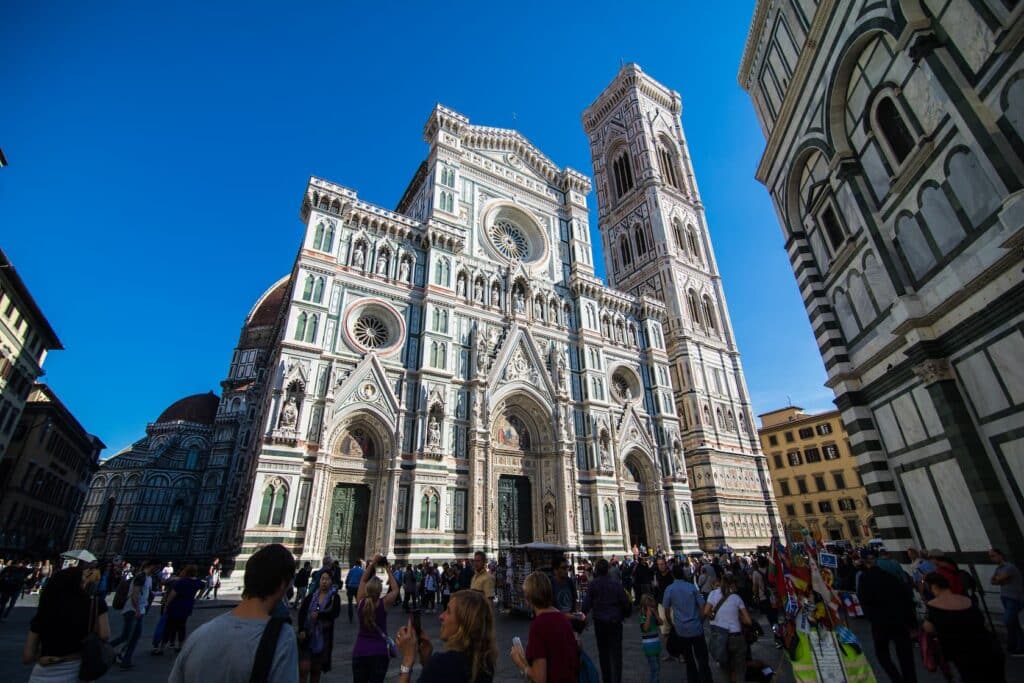
Historic centre, Duomo and Via de’ Tornabuoni: premium positioning and city visibility
For brands that want a more premium presence, the historic centre and the area around Via de’ Tornabuoni can offer a more aspirational context.
This area can make sense for fashion, accessories, jewellery, premium beauty or lifestyle brands that need the urban environment to reinforce their positioning.
It works especially well when the goal is to:
- build brand perception
- create a curated experience
- welcome press or key clients
- connect with an international audience
- activate a more city-facing presence
In this case, the space should not be seen only as a venue. It should be part of the brand narrative.
San Lorenzo and surroundings: local energy, fashion and circulation
San Lorenzo can be interesting for brands looking for a more urban, accessible and dynamic connection. Its proximity to areas of movement, retail, markets and local circulation can help brands that do not want an overly institutional presence.
It can work for activations with a more informal tone, product capsules, collaborations or experiences that combine fashion, city and community.
Oltrarno, Santo Spirito and San Frediano: creativity, craft and experience
For brands with a more artisanal, cultural or experiential narrative, Oltrarno can offer a very different reading.
Santo Spirito and San Frediano have a more creative identity and are less obvious than the touristic centre. They are not necessarily the first choice for brands looking for high volume, but they can be very powerful for projects that want to build affinity, conversation and a more intimate experience.
They usually work well for:
- independent brands
- private presentations
- capsules with craft storytelling
- community-led experiences
- activations with a cultural or lifestyle component
Pop-up, showroom or private activation: which format fits best?
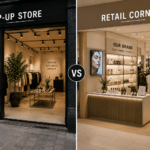
One of the most common mistakes when planning a presence during Pitti is assuming that everything should become a pop-up store.
Not always.
In Florence, the right format often depends more on the business objective than on the trend.
| Brand objective | Recommended format |
| Public visibility | Pop-up store or temporary retail |
| Buyer meetings | Temporary showroom |
| Collection presentation | Private space or gallery |
| PR and community | Brand event or activation |
| Premium relationships | Hospitality suite or exclusive venue |
| Market testing | Flexible temporary retail |
Pop-up store
A pop-up store makes sense if the brand wants to sell, test product, generate street visibility or open a temporary presence to the public.
In Florence, it can work especially well if the product has a strong design, craft, fashion, accessories or premium lifestyle angle.
Showroom
A showroom is often the most natural format for brands that want to use Pitti from a professional perspective.
It allows brands to organise appointments, present collections, welcome buyers and control the experience more effectively. It also reduces dependency on foot traffic and focuses commercial effort more clearly.
Private activation or brand event
This format is especially useful when the priority is not immediate sales, but content, relationships, press or brand perception.
It can work well for brands that want to stand out without competing directly for attention inside the main fair environment.
When should brands start looking for a space for Florence Fashion Week 2026?
The most useful answer is: before the pressure becomes obvious.
Florence is a compact city, and during Pitti the availability of well-located spaces can shrink quickly. This matters even more if the brand is looking for a specific area, a premium format or an activation that requires production, build-up, permits, catering, staff or local coordination.
For simple projects, reasonable planning may be enough. But if the activation requires design, production or a more curated experience, it is better to start much earlier.
Ideally, brands should define early:
- which Pitti edition matters most
- whether the goal is visibility, meetings, sales or PR
- whether a showroom, pop-up or private event fits best
- which Florence area supports the brand positioning
- what technical requirements the space must meet
- what local support will be needed to execute properly
Florence does not only reward presence. It rewards precision.
What brands often underestimate when planning an activation in Florence
Many brands approach Pitti by thinking first about being close to the event. And while location matters, it is not the only relevant decision.
What usually shapes the outcome is the combination of:
- timing
- format
- district
- production
- commercial agenda
- guest profile
- quality of the space
- logistical ease
An activation can be very well located and still underperform if the objective is unclear. On the other hand, a more discreet showroom can generate much more value if it is well connected to buyers, appointments and a carefully designed experience.
That is why, before choosing a space, brands should answer a more strategic question: what should the brand achieve during those days?
Explore spaces in Florence for Pitti Uomo or Florence Fashion Week
If your project is already moving from research to execution, comparing real spaces early is usually more useful than waiting until the calendar is closer.
At Go—PopUp, many brands are not just looking for a “pop-up store”. Some need a showroom, others need an event space, others need a private activation or a flexible venue to present a product during Pitti.
The key is not to limit the search by label. What matters is finding a space that fits the brand objective, the calendar and the type of relationship the brand wants to create in Florence.
You can start by exploring spaces through the Go—PopUp marketplace or by sharing your project to receive support with scouting, production or local activation. Existing Go—PopUp Fashion Week guides use this same logic: dates matter, but the real decision is what type of physical presence makes sense for the brand.
Planning Florence Fashion Week properly starts before Pitti
Florence follows a different logic from other fashion capitals.
It is not always about maximum traffic or the most visible location. Very often, the value lies in choosing a space that helps create better relationships: with buyers, press, partners or a professional community moving through the city for only a few days.
During Pitti Uomo, Florence becomes a meeting point where commerce, design, craft, fashion and networking are highly concentrated. That turns every physical decision into a strategic decision.
The calendar matters. But for a brand, the real task is to go one step further: understand which edition fits, which format makes sense, which area supports the narrative and how early the right space should be secured.
Because during Florence Fashion Week, or more precisely during Pitti, being present is not enough.
The difference is being present with intention.
FAQ: Florence Fashion Week 2026 for brands
When is Florence Fashion Week 2026?
Florence does not have a Fashion Week in exactly the same format as Paris or London Fashion Week. The main fashion calendar reference in the city is Pitti Immagine, especially Pitti Uomo.
In 2026, Pitti Uomo 110 takes place from 16 to 19 June 2026 at Fortezza da Basso in Florence. Other relevant Pitti events include Pitti Bimbo, Pitti Filati and Fragranze.
Which Pitti edition is best for a fashion brand?
It depends on the objective.
For menswear, accessories, tailoring, premium lifestyle or contemporary brands, Pitti Uomo is usually the most relevant window. For beauty, fragrance or sensory experiences, Fragranze may make more sense. For childrenswear or textile-related brands, Pitti Bimbo and Pitti Filati can be more appropriate.
Is it better to do a pop-up or a showroom during Pitti Uomo?
There is no single answer.
A pop-up store can work well if the brand is looking for public visibility, sales or market testing. A showroom is usually more efficient if the goal is buyers, press, appointments or collection presentation. In Florence, many brands obtain more value from selective formats than from activations that are too open or generic.
Where should a brand rent a space during Pitti Uomo?
If proximity to the event is the priority, brands should look around Fortezza da Basso or Santa Maria Novella. If the objective is a more premium brand reading, the historic centre and the Via de’ Tornabuoni area may be more suitable. For creative, cultural or craft-led formats, Oltrarno, Santo Spirito and San Frediano can offer a more distinctive context.
How early should brands plan an activation in Florence?
The more specific the area, format or production needs, the earlier planning should start. During high-demand periods such as Pitti Uomo, the most interesting spaces can become limited quickly, especially when brands are looking for a well-located showroom, a premium venue or an activation with technical requirements.
Useful references and additional reading
To validate dates, calendar details and official context around fashion events in Florence, these are the recommended sources:
- Official Pitti Uomo website: calendar, dates, venue and Pitti Uomo programme.
- Official Pitti Immagine website: general event calendar for Florence-based Pitti events.
- Additional context on Pitti Uomo 110, participating brands and edition highlights.
Related Fashion Week guides: For a broader comparison of activation opportunities, explore Paris Fashion Week, Copenhagen Fashion Week and Amsterdam Fashion Week.
Planning a pop-up: Before committing to a space, review our guides to choosing the right city for your first pop-up, deciding how long a pop-up should last and creating memorable pop-up experiences.